Why We Sleep

Why We Sleep
~ Matthew Walker
Date Read: 26th May 2025

I picked this book out of academic curiosity. I must say it is quite light & easy to read considering the topic. However, it is also intense to absorb, and very relevant in many applicable areas of our life.

We consider memory as an important attribute and retention of new information learnt even more relevant. Throughout this book I reflected upon the terrible sleep habits that most of us seem to have. That as a species, we appear to chronically sleep deprived is quite shocking, but true.

Interestingly, the sharp allegation of the aggrandization of late nights both as social, academic or corporate currency is leading us to chronic illnesses due to sleep deprivation. I felt this strongly – how it is ‘cooler’ to stay up late.

Incidentally, I was also teaching a pan-India program on the necessity of sleep – understanding how we were either morning people, night owls, or in-betweeners. The stigma attached to night owls was evident in every conversation! The assumption that night people are lazy, inefficient or just not productive is rather harsh – and in itself deters productivity. In fact, the rigid 9-5 ism was systematically jarring to human bodies by demanding conformity as opposed to individual contribution at peak levels.

My biggest takeaway was also about how adolescent and teenage hormone patters actually make it extremely difficult for them to rise early for school and colleges. If you look at this alongside the 9-5 parental structures, it would be easy to understand way children ought to be in school earlier instead of later, even at the risk to their own unhealthiness.

The author is candid, but informative & and expert on the subject. So, reading his narratives of patient experiences and symptoms related to poor sleer are all on point.

My Kindle Notes & highlights run into 10 Kindle pages, that are too intense to summarize. All I would say is this ia great book for non-medics alike and makes for an eye-opener for spouses, parents & family members

My Rating: 4.5 / 5

For the love of books…

Do you remember your favorite book from childhood?

I grew up in Kuwait with my Grandmother – Atta, a name I christened her with, being the first grandchild. My Uncle Nelson, my Godfather and my favourite uncle also lived with us. Atta always told me how U. Nelson loved books and reading – so I’m fairly certain, he was a strong influence on my own bibliophilia, introduction to crosswords and Scrabble and frequently pointing us to the dictionary to find meanings of new words we heard or read.

My non-reader parents, were the most supportive parents ever, especially considering Kuwait had just 3 major bookstores back then, limited genres and a very expensive selection! My father never refused to buy me a book – whether it was from the bookstore after weekly Mass or when he returned from his visits to India.

Our school library, was well equipped, but our visits were haphazard and the reading habit, surprisingly, not actively nurtured. However, I was always surrounded by books – and to answer the writing prompt directly would reduce the fabulous tapestry of the imaginary world of my childhood, to a bare and inconsequential stitch!

I loved books as a child, but I was not an introverted bookworm either. When I was about 4 or 5, my mum and I visited her Palestinian friend’s home where her older daughter gave me a Ladybird classic ‘The Gingerbread Man‘. I remember reading it out loud in their home, and later happily walking home with that precious gift tucked under my arm. Many years later, I bought the 2002/3 edition of that very book for my firstborn – my children still remember the tune I’d sing it for them as I read out loud to them as babies.

Everyone knew I enjoyed reading as a child, so I often received books as presents. Atta initially nudged me towards Enid Blyton – those were the earliest books that I read and understood – I must have been around 7 or 8 then. The Mr. Twiddle series taught me to enjoy humour and smile at forgetful absent-mindedness. I loved his anecdotes so much that I was actually caught reading in class once and had my book confiscated for a few days. I’m guessing the teacher must’ve thought it was better to have my head buried in a book than to keep yelling, ‘Luvena, stop talking!!’

I fell in love with The Nancy Drew books when I was in Grade 4 or 5 and had read all the classic mysteries by the time I was in Grade 6 – but a significant reading year when I was in Grade 5 was with A Thousand and One Arabian Nights.

How that book came to my house, I’ll never know… but the magical worlds it took me to!!! Incredible! It made it even more special growing up in an Arab country and seeing the exotic colours, smelling the spices, kohl lined eyes behind women’s abbayas, and the sultry summers all adding to the mysterious visual landscape of a young girl with her nose buried in the unfolding pages.

The most special of my childhood, though, would be the St. Clare’s & Malory Towers series. The narrative felt like a permanent picnic – 24/7 with friends and scheming adversaries!! Those books always made me long for Boarding School – an idea that my mother was vehemently against! (Boarding School equalled punishment and we were to stay put with our parents throughout our schooling years!) In later years, Harry Potter gave me a broken heart as I realised I wasn’t ever going to be a Gryffindor witch!!

Those were the days… so many summers spent reading and lounging, in carefree childhood… nothing to do except eat, read, sleep…

This blog was first posted on Luvena’s World earlier today as part of the writing prompt! Hope you enjoy both spaces and do drop a like / comment.


The Answer is No

The Answer is No
~ Fredrik Backman
Date Read: 4th May 2025

I was looking for a short story – something that I could enjoy and Backman did not fail to deliver!

This was a quick book – I read it in a day – and I was pleasantly surprised at how an engaging short story can both land in your hands at the right time, as well as help put many things in perspective. Just my kind of book, just my kind of a story.

When a friend asked me what the book was about, I wasn’t entirely sure. I had only read a few pages, but I couldn’t really pin point to the exact theme. I thought it was about loneliness, so I told her it was a highly entertaining book about loneliness and a perspective of happiness. However, with every page I turned, I was aware of the metaphors that got me thinking – reading between the lines, putting more meaning behind the story and situation.

The official blurb says, ‘Told in Fredrik Backman’s singular witty style with sharply drawn characters and relatable antics, The Answer Is No is a laugh-out-loud portrait of a man struggling to keep to himself in a world that won’t leave him alone.’

But I feel the story is quite telling of a situation beyond the man, Lucas’ solitary world – and his attempt to keep it as such.

On the one hand we have Lucas, an individual who wants to enjoy a contented life without being disturbed by anyone. He seeks no interaction with the world, has no relationships, enjoys his Pad thai with peanuts, delivered to his doorstep and sits unperturbed, playing his video games.

Until he is disturbed by a rule-making body of Heads – the apartment Board – each chartering their own cause! Interestingly, only one character, apart from Lucas, has a name in the story. It was this de-personification of characters that made me pause to think of the deeper meaning to the plot-developers, after all!

Or maybe it was shift from a very character-based comical experience… to a metaphorical expression of the system we live it – society, political regime… the systemic machinery!!

But first, let me share what touched me deeply:

But actually she’s lent me this apartment. Apparently this doctor does this sometimes when she feels that mothers need . . . a break.

Green shirt. I resonated with her in some parts – the one as a mother, when she felt that she was underappreciated & invalidated. I think moms feel that sometimes. But what squeezed my heart more than ever was that an erstwhile doctor could sense that a mother needed a break – and did something about it!

And then from here on, amidst crazy rules about rules, I started having the stirrings of, ‘Hey wait a minute…’ It evoked in me odd memories of housing societies, bye-laws and people who created them – why they created them and the sheer ridiculousness of how they came about approving them!

…a funny thing about rule-loving people is that to them it seems more important to impose punishment than it is to actually solve problems, and a funny thing about rule-breaking people is that they seem to find breaking rules a lot easier to do if someone else has broken them first.

Everything, I mean everything about the world around us appears to be judgmental. There’s a whole drama going on in my mother’s apartment complex where it appears that everyone is baying for blood – everyone wants to pin down a culprit – punish, harm, hurt the individual they have already judged to be a criminal – albeit without any proof! And there is little room for introspection to see that they are engaging in worse demeanours – namecalling, humiliating, slander, gossip-mongering and creating unrest!

“responsibility” and “commitment” are actually two of the easiest ways of ruining any perfectly good day.

Ah! The story of my life! And yet, I remember a quote that my friend shared with me a few weeks back. ‘If you’ve not got haters, then are you even relevant??’ I persevere, though… responsibility and commitment are important enough and yes, require courage to show up.

That one group there is protesting against the pile. They’re anti-pile! But that second group is protesting for the pile, because they’re of the opinion that piles have rights too. And that third group is protesting against protesters, because they think this whole protesting thing has gone too far.” “And the fourth group?” Lucas asks. “Oh! They’re protesting against you!” “I . . . beg your pardon?”

And this is how it showed up – and here I felt the most convinced that this was beyond Lucas and more systemic. Take any issue at hand, and anyone who worked for it. I allowed myself a moment to reflect on these lines – on my own experiences… and how true they were! hahahah… because everyone just wanted to be a part of something! Everyone just wanted to have a say – and fair point! They were supporters and naysayers of the issue… and then there were supporters and vehement ‘against-ers’ of those facilitating the change! Haters will hate, I suppose!

So yes, I guess in many ways people do like to do something, ANYTHING, to give themselves a sense of importance… and to feel even momentary happiness through that; even if it meant shouting just for heck of shouting. There are those folks, some I know, who have nothing constructive to add to a topic, but say something just because they have a phone at their fingertips, so something must be added – no matter how daft & inane that contribution is – but their voice is heard. Contribution made. But somehow empathy strikes and slowly, perhaps, people start to feel genuinely concerned – concerned enough to empathise!

Circle back to the introspective stuff – the one that comes from empathy and social connection:

“But it was very nice to find that out for myself. What I don’t like.”

The revelation, like a layer peeled off a little at a time – that we come to know ourselves better. That we take time to know how we are one experience at a time. With agency. The condition of a society, even, slowly waking up from its slumber!

“You don’t need that much appreciation as a mother. Just a little bit. You don’t need that much validation. Just . . . a little. It’s so silly, but I miss another thing, too, from when the kids were very young. They used to come running and jump into my arms when I came home. Jump into my arms.

I had to pause with this one – long enough to remember my babies when they would run into my arms. I remembered when my oldest went on his first holiday alone and how miserable he was…. and how he came running into my arms as he spotted me waiting to receive him at the airport! How their little baby eyes would go over the parents heads in the audience, spot me, and give a wide grin & thumbs up before their performance – a performance meant just for me! Or even when my dogs would go bonkers the moment I entered the house… How all kids and puppies would wait outside the bathroom door – as if they feared I’d get flushed down the toilet somehow!!

Empathy – made me smile with understanding. I had been there, others would too.

While the emotions of empathy were playing around, Lucas shifted into a active role – a social & democratic one. A role where he had to assume responsibility and commitment… because the Board was simply not going to do anything about it!!

…in a way that we could say at the meeting afterwards that we had nothing to do with. That it was due to . . . the modernization of society. It can’t be stopped, can it, the modernization? So then it wouldn’t be our fault. That way we could appear to have been consistent in our principles,

And here came the systems of the world – coming in to take credit, but shy away from real committed work! Where the government or systems would refuse to act for the overall welfare,
because they couldn’t afford to admit failure!
That they stood by, stubbornly with their principles, even if the principles were wrong.
That even if the solution were right, they would not admit it, because admitting it would mean their principles were wrong!!
So they would turn a blind eye and happily stay locked in…
And blame the change (albeit welcome) on an opposition.. or opposing force.
And then take credit for it.
Sounds familiar, doesn’t it?

Love isn’t powerful enough. But spite? Spite can change the world…

Sigh! How true those words were! So true, that the pain was right there as I read them. With love and support, came one big of movement & change… but monumental change came from the reverse application of love – spite! A great motivator to action just to prove that the facilitator is wrong!

Interestingly, this also came up:

If you want to see normal people turn into power-hungry dictators in five minutes, all you have to do is say the magic words: “We’d love to hear your suggestions!”

Interestingly, a senior colleague of mine had given me this leadership suggestion many years back. ‘Give your team just enough options to have a voice.’, he had said. Democracy can get chaotic if you ask them to think without establishing boundaries. I have learnt to apply that in many spaces – open ended questions for brainstorming, but finally 3 options to pick one from.

So, overall, I loved the story! It was quick, entertaining and deeply profound in its own way. I refuse to think that this was a book just about a man struggling to keep to himself and remain content. In my mind, I have found a correlate – the system, governance, society and social constructs. It has everything from leadership, power dynamics, interference, community, proponents, opposition and finally the call to action. And best of all, there are not faces – it was almost like The Great Indian Kitchen (the original movie) where patriarchy had no name – it just was an ism, a construct….

I really enjoyed it… and I really enjoyed the fact that I enjoyed a short story just as much as I did!

My rating 5/5

Stuck on ‘Aleph’

I did not enjoy reading Aleph – simply because I had no time to devote to it. I had a feel of the book and recognized that it might be something I might relate to and resonate with – but it was too slow.

I always enjoy the introspection and reflection that comes along with a book I am reading. It opens doors to different life experiences and even more perspectives on them. Sometimes it is a revelation to an unthought of possibility, other times it is a just an agreement with how things are.

With Aleph, let’s say, I just wasn’t feeling that frustration about the meaning or purpose of life anymore – like Coelho feels at the start of book. I FEEL that I may have already processed that part of me some years back – so I really wasn’t curious. But then, again, the point in time when I’ve picked this book to read – this is a time of chaos and exhaustion. Shifting homes with 3 teenagers and 2 old dogs is not a time for a heavy read.

And definitely not a time for heavy and s-l-o-w read!

I needed something either lighter or quicker….

I needed something that was moving along rapidly from one point to the other. So I tandem read, ‘Why We Sleep?’ and I loved it! I finished about 70% of the book in 3 days! Of course, I was also preparing for a related lecture to deliver, so I had motive – but it engaged my mind.

That’s it for today. I don’t want to diss the book completely. It just isn’t piquing my interest today. So, I’ll let it rest by my bedside for a few days and come back to it later.

This needed a bit of documentation – also, for my good friends at the newest reading group in town – KCA Literati!

A Cut Above

A Cut Above
~ Colette Caddle
Date Read: 23rd January 2025

I love Colette’s books – so when I found this title in my book shelf, I realised that I had read all her work, except, somehow, for this one! In fact, it was her debut novel that had introduced me to & stirred my love for contemporary Irish women authors. This book, A Cut Above, however, seems to take me to a time when Caddle was still improving on the ropes of authorship.

The book, and writing, had the distinctive marks of Caddle’s style and eye for emotions, yet there was a hesitation to open up to raw vulnerability – something I found refreshingly present in her later works. So, as a reader, I felt fondly of younger days and appreciated how far along she had come as a novelist.

The plot was good – though I wouldn’t say it thickened. Reading it in 2025, I feel as a mature woman reader, I needed more.

The book started well, with enough context setting up to recognize and resist ageism – but at the same time enough opportunity to appreciate changing relationship statuses. A number of topics were gently touched upon, the most obvious one being on the friendship between women.

Toni’s marriage to Theodore French might be falling apart – but it also accepted, albeit with some raised eyebrows the age gap between the two, leaving many mouths questioning, ‘Why?’. Toni doesn’t ever answer the ‘why’ or the ‘why’ she left her long-term, compatible relationship for this man who clearly did not value her.

I was hoping for some real meat to the suspense. I was hoping for Theo do be a real bastard, to make his actions seem preposterous…. but the book and the extended plot did seem rather over drawn after a point.

In enjoyed the parental bond between Toni & her step-daughter – it made teenage affection real, but teenage immaturity can be a real pain in the ass, so that was well played out. I think my highlight was Jade calling some hard sense into the teenager.

As I’m documenting this review, I’m realising a few things about myself.

I needed this book to balance out a lot of non-fiction reading and some real-life happening with me. I needed some quality chick-lit – I was happy to read a book by a much-loved author, even if the story didn’t match up to my literary tastes. The book centered women with real emotions, men with some real emotions, and a setting that was not overly complicated. For me, it checked all the right boxes – it met me where I was. I’ve followed this book with a non-fiction (that I’ve enjoyed) and semi-fiction (that I’m waiting to grow on me)

I realize that I am now a mature reader, who reads through books with the lens of my experiences and insights – I make up my mind, contemplating, debating and reflecting as I turn the pages.
I also realise that I sometimes contradict myself and give myself the space to change my mind – no rigidity – just the space to be. There is freedom in being less rigid and allowing yourself – no, not allowing, in knowing, that you always have the opportunity to change your mind.

It was my stop gap book, this one. No great shakes, but hit the right spots..

My rating: 3.5/5

A Rumi inspired inquiry

Whatever happens in your life, no matter how troubling things might seem, do not enter the neighbourhood of despair. Even when all doors remain closed, God will open up a new path only for you. Be thankful! It is easy to be thankful when all is well. A Sufi is thankful not only for what he has been given but also for all that he has been denied.

(C) Elif Shafak THE FORTY RULES OF LOVE

When my friend post this quote on social media, there was a call for introspection & thoughts. There was a question about the existence of God, when all we could see was war, strife, crime and inhumanity. There was a debate on the precipice – did we believe in the goodness of God? Why did he allow children to be harmed? Why did good people suffer? Why did criminals & corrupt politicians seem to thrive? Why?

I was itching to share my thoughts, but home shifting & caring for a child after surgery was tough. So, sitting in the cab on my way home from hospital gave me 45 minutes to just get my thoughts rolling…. Since I didn’t want to hijack my friend’s facebook post with multiple mini-essays, I thought of putting it together on a blog post. So here goes… All views, experiences, learnings & inferences are mine…

Here’s how I look at it:

  1. God is omniscient, omnipotent, omnipresent, etc…and we humans are made in the image of God. In the image, we are not God. We are flawed, models of a much bigger, much awesome wholeness – we are very limited in what our tiny brains, nervous system, and mental prowess can ever fathom. Yet, we believe we are all knowing and all understanding.
  2. Following from 1., we have to realise that we can only feel, sense and understand only the handful of emotions, feelings, knowledge that we have the capacity and bandwidth to understand. Eg, old Am/Fm radios and transistors are unable to pair with our bluetooth speakers. The frequency and wavelength is different. You can’t hear / receive. But it doesn’t mean it isn’t there!
  3. Inability to prove or non existence of proof is not the proof of non existence. (This is something my teacher had taught me some years back.)
  4. So a clear bit of humility and a huge dose of faith in that imminent power that exists is that we are called to carry – as spritual beings, seekers, even and particularly so as Christians.
  5. Now to the point that is in discussion – on the goodness of God and the utter unfairness of sinfulness, crime, hedonism and so forth… We need to go back to my #1. We seek to explain God through the lens of a fragile human experience. It’s like a well explaining what the ocean is…an attempt bu inevitably falling short. If God is above and beyond the human faculty, using human feelings to say, ‘doesnt God feel sorry/ How could God allow all this pain/ God must be enjoying this..’ is reducing the Almighty to a John/Jill Doe. We are humanizing God… Benchmarking God to human standards and judging Him to human’s shifting morals. Note that morality is transcendental – what was immoral in the 14th century doesn’t cause us to bat and eyelid today. the same will hold true in a few more centuries for today’s gasp-inducers.
  6. For the unfairness of bad things happening to good people… I have 2 things to say. One is just an observation – That we are all pampered, self absorbed brats – only looking for instant gratification and refuse to experience pain at all… We have many neuroreceptors and neurotransmitters for a range of emotions. Still, we only want to feel happiness and when the happy feelings reduce, we want quick fixes with food, alcohol, drugs, money, sex, all distractions. We only want God to be the giver of good things, no painful things… At all. God should be Santa. We thank God l him for gifts, do we thank Him for challenges?? For the range of human emotions and experiences? No…
    For the second part, it is an explanation that isn’t from catechism… It is from other philosophies that I’ve studied but if we keep an open mind, we may perhaps see the Christian context. We believe in souls… But souls are timeless. When the soul leaves the body, we are left dead, to return to the earth – from dust to dust.. So the soul has a purpose – a god given purpose. When the soul completes that god given purpose, they go back. We, in our attachment to people, our loved ones, only see the earthy body and forget their soul that is constantly living their god given purpose when they’re in front of us. We believe that people should live Long lives – but shouldn’t they live full lives for the Glory of God? Whether it be a short or long one regardless? Shouldn’t we trust ‘In His Time’? Instead of by our time (and we know what IST is anyway!!)

What happens to us is not in our hands, but how we respond to it is. We can pray for forbearance, fortitude and enough endurance to go through it and come out of it… Or we can be ruthlessly aggressive – kicking and cursing all along the way.

But doing good, is in our hands. Without hoping for the return gift from God… without keeping track. Trusting that the fruits will come to you In His Time. So when babies die, when rapes happen, those perpetrators will receive their due also in His Time… And why those little precious ones? Maybe because the uproar that comes from harming pure children and innocents, transforms is astounding ways… Through generating sympathy and empathy in all of us. Remember we are not God.

Also, those little pure lives, are also taken back to God when their very painful, but God in given purpose of experience so much suffering in their little lives has been completed… We feel the grief, we are called to empathize.

We are called to faith and gratitude and so much more that we receive in His Time.

Book Review: The Island of Missing Trees

The Island of Missing Trees
~ Elif Shafak
Date read: 30th December 2023

***Spoiler Alert***

I loved Shafak’s The Forty Rules of Love – so it was a no-brainer that I would pick this book – I enjoyed the style and I enjoyed the mysterious ancient worldliness that the words immersed me in. More than that, it was always the emotions and sensations that the writing evoked in me.

This book was different, though. From the very beginning I was simply amazed at the simplicity of who was narrating the story! I was repeated in awe at The Fig Tree’s perceptive style. I couldn’t help but smile at the years and years of school essay-writing where we had the option of writing an autobiography. I remember opting to write an Autobiography of a Rose bush – inspired by a question in my trusty Wren & Martin. My Grade 8 English teacher, Mrs. Merlyn, was very impressed at the choice. I remember taking a few days to imagine and then imagine a life some more.

Shafak’s book brought a newfound appreciation to that high school English essay assignment. I could appreciate, with adult profundity, the author’s effort of infusing historical facts, and experiences of generational trauma alongside a deep reverence of Mother Earth and all her inhabitants – birds, insects, the living soil and trees.

I did not want to read this book in a rush – so I did not. I read passages again & again – falling in love with the words & sentiments every time I did that. I reflected on my own life in so many ways through so many words. The words and sentences that left a mark on me – this time I recorded them in my notebook, on my phone, on my e-note app… and in my heart.

‘…because there is one thing I have learned: whenever there is a war and a painful partition, there will be no winners; human or otherwise.’

Fig Tree

The words washed over me repeatedly but some things just needed to leave a mark here in my review. Here was not just a story of lovers separated and reunited. Here was a story of a parent and his daughter, of siblings, of love & betrayal in a war-ravaged country… It was also a more intuitive and sensitive story of the trauma of war that gathers and transfers from generation to generation and in the subtle awareness of the animals and plants who are also the victims – and survivors of war.

‘Truth is a rhizome – an underground plant stem with lateral shoots. You need to dig deep to reach it, and, once unearthed, you have to treat it with respect’

Fig Tree

At first, I quite disliked the Fig Tree. I felt we were going to dip into a weird territory of a tree’s love for a human. I did, however, allow myself the opportunity to be surprised and keep an open mind about where the author was taking me. I’m glad I did. The Fig Trees’ astute and gentle handling of stories and wisdom was beautiful. I think this idea of truth, described through botanical truths, was simply astounding! It made me sit back with my own dalliances with truth – my own, fiery and irreverential respect towards facing the entire wrath of the painful truths in my life… to my unequivocal frustration with those who chose to refused to see and approach the truth and instead embrace a denial that was suited for public consumption. Was truth just a passing fallacy? Or was truth only valid if it suited to maintain the flimsy excuse that we wanted to portray to the world – who had already seen and made their inferences… and honestly didn’t care?

Truth was a rhizome; denial its shadow. Which way were we choosing?

More than the exploration of human pain, sorrow and grief, I was deeply touched by the Fig tree’s mystic wisdom as she gathered nuggets of information and understanding from the many dwellers and visitors to her branches, gradually shedding light on the larger picture for us as readers. The compassion flowing through the proboscis of a butterfly to the futile tragedy shared by the mosquito both giving insight into the intertwined lives Kostas and Dephne and their dear friends.

Contemporary social themes in conservative society – adolescence, self image, cyber bullying, xenophobia, premarital sex, homosexuality, pregnancy out of wedlock… initially made me wonder if they would be brought in simply to include into the narrative. However, as I turned the pages, I realised the depth of human emotion as well as the nature of the human condition were both so beautifully and thoughtfully expressed, they felt like someone somewhere would surely have felt heard.

‘Why are you giving him a second chance? Don’t you know a gardener in love with roses is pricked by a thousand thorns?’ But once again, she didn’t listen…’

Now what do I say about this? I smiled at this. I did, honestly… because in many ways I understood why she was giving him a chance at all – second, third, or maybe the last! But I understood. There is a kind of conviction that we feel when our emotions are strong enough to stand by. Someone very dear to me once said, ‘I stand by my emotions…‘ I do not know how valid those words may ever have been – least of all today with changing circumstances, but had I been the one, I believe I would have still meant them. So why do we disregard or disbelieve another’s belief? Why do we disregard another’s conviction to love beyond a single chance? Maybe because earlier this morning I found a quote that resonated strongly with me on these lines. I share it here… and will leave you to draw your conclusion from it:

There were themes and stories I could relate to – sometimes in what the mosquito shared – she was, after all a victim of the system – but our instinctive repulsion and lasting anger also has its place. The authenticity, yes, that is what it is – the authenticity with which truth, as the different characters saw life and their situations was the glue that held it together for me.

‘Bridges appear in our lives only when we are ready to cross them.’

… and yet, to gather the courage to step on to the bridge deserves a whole new book again. I was led again and again in this book, to feel deeply for Dephne and her courage. I was repeatedly reminded of the fact that it was women, through the centuries up until the present day who embraced the courage to step into bridges of honesty and change while men, in all their endowed bravado chickened out. Women carried a resilience, whether they knew it or not, to either live in insufferable silence because they are denied the choice… or to live on their own terms, once again in insufferable loneliness because they are denied the availability of honor and respect for making that choice. Dephne was brave, and she suffered for it. She crossed the bridge – how I hate that word, having heard it multiple times – and yet, being faced with a reluctant non-crosser, simply because the weight of a ‘what if’ was heavier than the lightness of honesty. I appreciated the women all the more for it.

‘Human remains – what exactly did that mean? Was it a few hard bones and soft tissue?…. or was it the intangible - the words… dreams…, heartbeats…’

‘Humans, especially the victors who hold the pen that writes the annals of history, have a penchant for erasing as much as documenting. It remains to us plants to collect the untold, the unwanted.’

And then, we moved on to grief – an emotion I held closely and guardedly… because it is strange to fully explore, until you realise that the human condition is such that the language of emotions is universal despite the words that tie geographies.

‘You don’t share a language, you think, and then you realize, grief is a language. We understand each other, people with troubled pasts.’

‘Our work is about grief – and memory. And women are better than men at both.’

Butterflies and Bones

‘Sit with that’, I told myself. It wasn’t because of how I was processing my grief – it was because it was blending my process with my work – and how I was often told about my writing meeting people where they were at. Was it because of the Universal language of love, heartache and grief? Maybe so… but the next set of words encapsulated all the emotions and feelings of unspoken words and sentiments. The hurt that remains trapped in one’s heart simply because there is no way to pour them out – no ear to listen to them, no arms to embrace the chest that was bursting with them… no one to hold them delicately as they threatened to spill out, and hence remained unspoken and festering… always, always misunderstood for misplaced anger. Never being understood as an angry sound only and only of the heart-wrenching pain that underlie them.

Behind her sudden anger were all the words that had been left unsaid between them, swirling inside her soul like unsettled flakes in a snow globe.

Butterflies and Bones

There’s more, a lot more before this books comes to a close. But honestly, I do not want to finish this book at all! I want it to go on & on and want to savour it for many more months.

The Island of Missing Trees is perhaps the most beautiful writing I have come across in a long while. It has a maturity that defies simplicity. It is not a heavy read, yet it gently caresses your heaviest of emotions and validates them with the sweetness of a ripe fruit offered by The Fig Tree. I was reminded of the multiple facets of situations in life and the choices we are presented in youth and as adults. I was reminded of the reality of love versus a compromise – or even a compromise for the sake of love and the courage it takes to love beyond the strictures of societal stipulations and limitations.

I was reminded of the power of truth to liberate us versus the power of a threat to hold on, bind and suffocate.

And then I was reminded to breathe, because after the longest inhale, it was definitely time to exhale.

This must be one of the most beautiful books I have ever read. I started in 2023 and just could not bring myself to finish it at my usual pace. I delayed the end by re-reading entire sections and chapters simply to savour the beauty that the pages poured out.

In many ways I felt like the closure was just like life it – without finite starts and ends. I also saw the book as an opportunity for me to pause, multiple times within a paragraph even, to reflect on my own experiences. That to me, is the essence of a powerful story – the ability to make both transport the reader to another world – or to transpose themselves into the story and explore the therapy therein.

It isn’t easy to dip into the shoes, or roots, of a tree, but here the ease to slip in and out of human form, generational differences, war, strife, xenophobia…. and even the metaphysical!

I’ll leave you to definitely pick this book up and read the story of Ada, Kostas, Dephne and The Fig Tree and truly hope you fall in love with it just as hard as I did.

Rating: 5/5

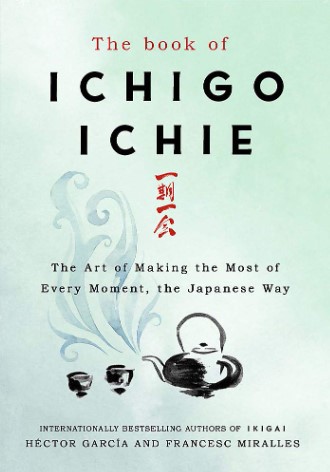
Book Review: Ichigo Ichie

Ichigo Ichie

~ Hector Garcia & Francesc Miralles

Date read: 13th January 2023

I’d seen this book in various bookshops and online stores, but I heard of it in a theatre workshop when our director spoke of it. Needless to say, I was intrigued to find out more and I think this has been a much needed read for me to segue into 2023 after an immensely volatile 2022.

I believe that ideas, thoughts, teachers, students, people and books, all come to us at a time when we need them; when we need to pause and listen to an idea that can support us as we navigate and transition through challenging situations. Ichigo Ichie did that for me.

A small and easy to read book – I took five months to read it.

Annual book reading challenges often bring out the competitive streak in me. What should be the ‘joy of reading’, ends up being a race against time – quality being compromised over quantity – even if you choose to read just a handful of quality work. One thing this book allowed me to discard is the urge to sign up to reading challenges. It also created sufficient space for me to drop the guilt of not logging or even completing my 2022 reading challenge.

I read a number of books last year. Uncharacteristically, I didn’t complete most of them. And I am okay with it. I enjoyed them in that imperfect readership.

I also enjoyed not really knowing what happened in the end of some of the books!

I think I enjoyed the pages while I read them – possibly knowing that in any particular moment, I read and absorbed exactly what I needed – and that moment of comfort from the pages of that book would never return.

Well, it also wasn’t just joy and comfort.

A couple of books that I read brought me to feel extreme discomfort too! One surfaced visceral disgust in me at the author’s attempt to empathize with pedophilia. Another unsettled me deeply at the inscription that was handwritten in the book – an inscription that rattled me every time I opened the book; reminding me of a history that accompanied that inscription. In the end, I refused to read the book at all.

You may be wondering if I am actually reviewing Ichigo Ichie or reminiscing about other reads of the year. I think it is both. While I was immersed in the pages of Ichigo Ichie, I paused many times to reflect on how I felt in the past – with relationships and experiences – as well as savoured fully the richness of the moment I was in while holding the book in my hand.

Savouring the book included the beautiful textures of the cover, the images, the pages, the font – the totality of this beautiful little pastel covered work of art that intended to touch the life of the reader in a deeper way.

The book impressed me in many ways – mostly with the simplicity of approach and of bringing the power of attention into focus. It helps us to explore the potential within a moment by using the power of our senses and conscious choice. I found myself considering the exercises within my personal and professional relationships too.

There were many things that I knew already – occupational jargon & pre-existing knowledge. But there were plenty more that I saw differently, that touched my heart & soul like a balm. That made me feel present and also introspect on areas and relationship where I could do better – much better.

This book & the practices it shares, is applicable to all relationships and settings – from personal to business… and beyond. The book gave me a feeling of hope and joy – that there is hope is the greatest gift of all! I loved it… and I think it might be a frequent giftable too.

I hope you take a moment to enjoy it and share it onwards as well.

Ichigo Ichie

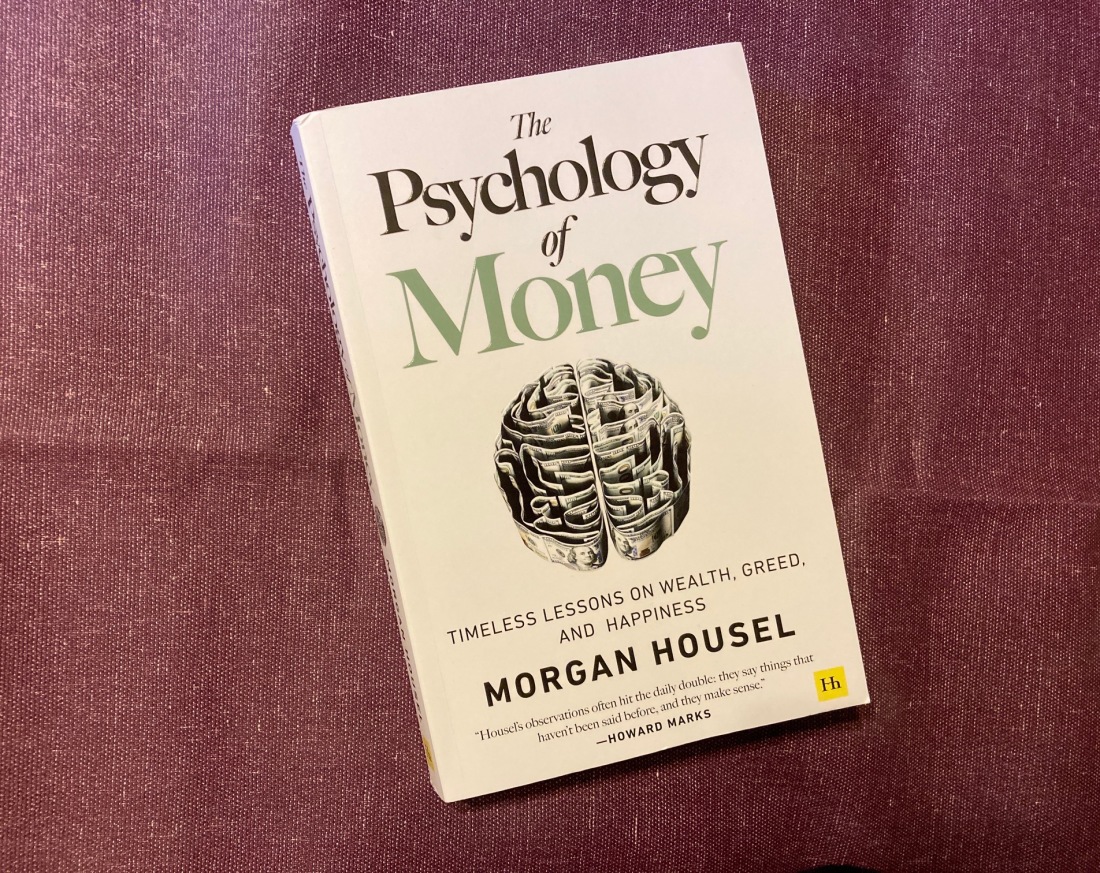
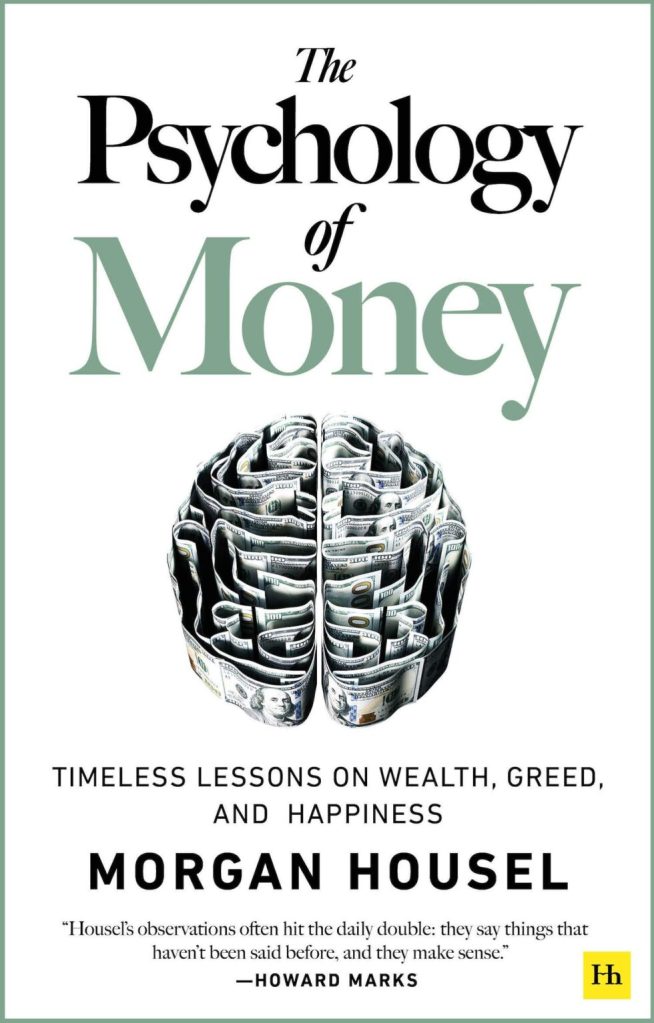
Book Review: The Psychology of Money

The Psychology of Money

~ Morgan Housel

Date read: 25th January 2022

**Spoiler alert **

I read sparingly in 2021 – let’s just say it was a busy year… And this year, my reads have already started on an interesting spin. I was lent this book with the hopeful instruction, ‘I want you to read this book…’ so, well, I did. Considering this isn’t a genre I would usually pick, it was perfectly aligned with my intention to bring in diversity to my reading list. Additionally, I’d say it does call in for a little extra effort when the suggestion comes from an industry insider as well as, ahem, someone who has slowly inched their way into a heart space (sigh! – different blog, another time, another blog space for that..)

Anyway… I had read a couple of Housel’s essays that were sent to me before receiving this book. I liked the style of writing – it reflected my own writing, reading & comprehension. So I welcomed the book as it didn’t seem overwhelmingly burdensome to read for a industry outsider. However, apart from the accessibility of the content, what really impressed me was that the book really spoke more about my core subjects – life, humanity and philosophy – than finance! In fact, the deeper I got into the book, the more I found myself wanting the person who offered me the book to read it!

These were nuggets of wisdom that were so beautifully presented within a ‘money’ context! It warmed my heart to find some concepts strongly resonant with my own talks on yoga & philosophy; it was a wonder that ideas around money and investments were alienated from so many people just because of ignorance. Yet, money could easily be as much a source of security as joy and for all the right reasons – that do not include greed and gladly encourage humility.

So here are some key lines from the book, although taken from a finance, money & investments context and life’s perspective that made deep impressions on me:

You don’t need tremendous force to create tremendous results.

This is the Law of Least Effort, isn’t it? To start the book with this message had my instant attention. Reason? Over the years, I have figured out that I always, always envisioned struggle to achieve a successful result. I looked at any situation and could visualize the most complicated way out. The positive side of that attribute is that I am brilliant in crises and can almost always see the way out. But in the long run, I think it helps to be cool about things and realise that not all results needed tremendous force. Easy effortlessness was a really good way to start taking steps towards financial strength & independence. I liked that. Let’s go!

And just as quickly came in this truth bomb!

Getting money is one thing. Keeping it is another.

So yes, I think it was the right book in the right hands!

A mindset that can be optimistic and paranoid at the same time is hard to maintain, because seeing things as black or white takes less effort than accepting nuance.

Interestingly, there was nuance to both optimism and paranoia in the author’s perspective – calling for a healthy dose of paranoid optimism or optimistic paranoia – whatever the case may be!

He associated good times with the end of bad times.

Ok, I took this one a tad personally. I was once asked to think about the ‘good times‘ in my past relationship and the realization that my good times were just when there weren’t any bad ‘walking on eggshells’ times was gut wrenching. This association with money about one’s relationship with money and finances caused a deep shift to identify my own approach to moolah.

When you accept that tails drive everything in business, investing and finance you realize that it’s normal for lots of things to go wrong, break, fail, and fall.

Something I’ve learned from both investors and entrepreneurs is that no one makes good decisions all the time. The most impressive people are packed full of horrendous ideas that are often acted upon.

… in most fields we only see the finished product, not the losses incurred that led to the tail-success product.

These words! Literally, these words! As an entrepreneur, as a mother, as a woman – these words were akin to the Holy Grail! We were all looking to chase the finished product and pay little attention to the effort, sacrifices, heartbreak and losses that preceded.

The highest form of wealth is the ability to wake up every morning and say, ‘I can do whatever I want today.

Control over doing what you want, when you want to, with the people you want to, is the broadest lifestyle variable that makes people happy.

But doing something you love on a schedule you can’t control can feel the same as doing something you hate…. Psychologists call it reactance.

Control… being in control…. the need to bring stability and control in a life where things often went out of control and without any warning! Sometime last year, as I was restructuring my business with a friend who was helping me in the process, in a matter of weeks I started feeling joyless. The very work that I loved doing felt like a chore and I felt a kind of weariness every single time I had to think about the month ahead. I thought it was burnout – it might have been a little bit of that – but what it was more was the fact that I was running on a schedule that was not in my control. The resistance I felt viscerally was appalling! The moment I associated financial health with the similar control to situations that I needed a semblance of reined in, the entire field seemed less daunting and a little more palatable.

When you see someone driving a nice car, you rarely think, “Wow, the guy driving that car is cool. ” Instead, you think, “Wow, if I had that car people would think I’m cool. ” Subconscious, or not, this is how people think.

If respect and admiration are your goal, be careful how you seek it. Humility, kindness, and empathy will bring you more respect than horsepower ever will.

Modern Capitalism makes helping people fake it until they make it a cherished industry.

I had to laugh at these words – not in condescension, no, but in gratitude. With my son studying Business, I often wondered how to navigate the fine line between capitalism and humility. These were powerful observations that were so obvious, we had noticed it ourselves and have made for great conversation topics multiple times. I have enjoyed these perspectives for bringing mature conversation to the table with my children – they have actually stimulated my thoughts as well with a more youthful point of view and an opportunity to revisit my own preconceived or experiential notions.

Intelligence is not a reliable advantage in a world that’s become as connected as ours has. But flexibility is.

Aiming to me mostly reasonable works better than trying to be coldly rational.

If fevers are beneficial, why do we fight them so universally?

I don’t think it’s complicated: Fevers hurt. And people don’t want to hurt.

Now, this wisdom started to take a more inward turn for me. It was less to do with money and more to do with attitude… and conditioned mindset. At this point, the messages started to feel very emotionally tugging, and started to invite me to think less about myself and more about attempting to understanding someone else’s reluctance to choose: ‘and people don’t want to hurt…’ That one cut deep.

Realizing the future might not look anything like the past is a special kind of skill that is not generally looked highly upon by the financial forecasting community.

The correct lesson to learn from surprises is that the world is surprising. Not that we should use surprises as a guide to future boundaries; that we should use past surprises as an admission that we have no idea what might happen next.

See what I mean? I wanted to scream these words from the rooftops! I wanted to make banners of these and send them out to all and sundry! I wondered why past experiences were considered to be cast in stone – as if the outcome of past risks and incidents were meant to replicate without any new variables to be considered. As if all players in every instance were one and the same and similar in outlook and contribution.

Then I remembered the control factor & realised how much I had evolved as a person. Today, I was more open as an individual and willing to embrace the surprise element in life. I also realised that life that gently presented me with a kind of courage that spelt, ‘Bite me!’ – a defiant daring that allowed me to flirt with risk to see if there was anything worthwhile from the experience. These words were mine and I was willing to fully back them with an entirety of acceptance.

You have to plan on your own not going according to plan.

The grey area – pursuing things where a range of potential outcomes are acceptable – is the smart way to proceed.

The idea is that you have to take risk to get ahead, but no risk that can wipe you out of ever worth taking.

And there were these words of caution as well. You see, I was actually swimming in some dangerous waters of late and there was substantial risk involved. It meant some careful consideration of what was at stake and clearly, a discerning look of if it was worth it. These words of caution were something I was not really willing to take fully. It felt painful to even consider them. Was that my money quotient as well? I don’t know… I wasn’t really thinking money at this point, but it was really disconcerting. What did this mean? Was I throwing caution to the wind?

Sunk costs – anchoring decisions to past efforts that can’t be refunded – are a devil in world where people change over time. They make our future selves prisoners to our past, different, selves. It’s the equivalent of a stranger making major life decisions for you.

And yet, I was reminded about being willing to take a risk and not decide based on historical incidents.

Expecting things to be great means a best-case scenario that feels flat. Pessimism reduces expectation, narrowing the gap between possible outcomes and outcomes you feel great about.

An appealing fiction happens when you are smart, you want to find solutions, but face a combination of limited control and high stakes.

They are extremely powerful. They can make you believe just about anything.

At this point, I wondered if I was yoyo-ing through what messages I was picking from the book after all. Was I being fancifully optimistic (and naive)? Was I just not reading the writing on the wall? Was I being taken for a ride? Taken advantage of?

Was I going to consider this as a book about money, finances and investment? Or was I going to read between the lines and derive meanings to apply to my personal philosophy? Was this not a look at money through the lens of life and the wisdom of relationships? Wasn’t this an exploration of attitude, relationship and mindset – a look at oneself and our approach to both money, situations, circumstances and ultimately our relationships – with people and money?

This book touched me in many ways. It didn’t really give me clear cut solutions but it did soften me up to speaking about money in a language I understand. It helped me to relate to money as a way of life – the way I see life.

My rating 4/5

Book Review: Purna Vidya

Purna Vidya

~ Swamini Pramananda Saraswati & Sri Dhira Chaitanya

Date read: 15th December 2020

For a crisp, clear and straightforward explanation of the various concepts and principles of Hindu Dharma, I think this is a great resource & guide book, especially for me as a parent. I have been curious about some of the Dharmic principles that are taught formally, but the Samanya Dharma that usually is absorbed within families and communities – the ones that are taught are intrinsic values of human life and existence were something that I felt were beautiful placed in Purna Vidya. To be able to relate values through story telling or even to clarify certain ideas and methods to explore the ideas is something many parents, educators and caregivers struggle with.

Purna Vidya was a wonderful presentation of values, Vedic principles and topics pertaining to our culture, heritage and literature. I was fascinated and excited to have a resource that could spotlight curious questions and present sufficient knowledge that would both satisfy initial curiosity of adults and children alike as well as encourage deeper inquiry, reasoning & discernment.

This book is a great addition to a family book shelf – especially one with young children, as a guiding resource.